
Iran says Hormuz stays shut until Washington pays for the war, and Trump says he is only semi-negotiating
Iran's security council says the Strait of Hormuz will not reopen until the United States lifts its blockade, withdraws its forces from the region and compensates Iran for war damage.
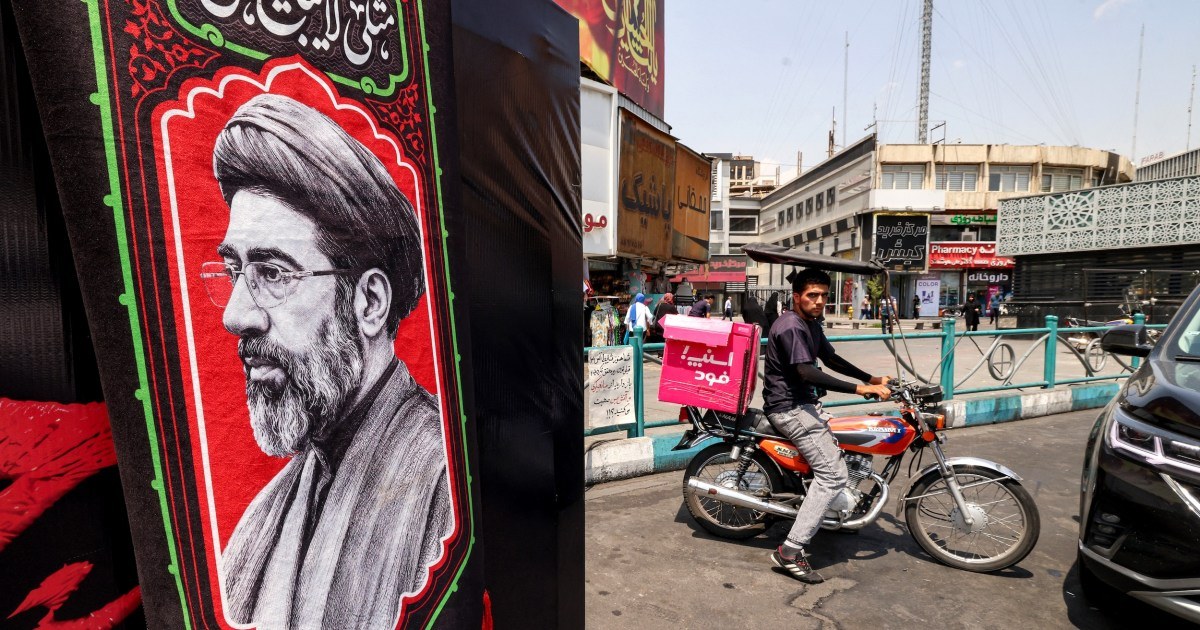
Iran's security council says the strait stays shut until Washington "corrects its behavior," and Trump says he is "only semi-negotiating." [87][350]
The split The mainstream left said Iran is "now dictating terms to the US global superpower" [76]; the far left called the whole argument a fight over "how the position of US imperialism in the Persian Gulf can be salvaged" [23]; the populist right described a president "prepared for now to let mounting economic pressure squeeze Tehran" [256].
Where they partAll camps accept Iran's demands and Trump's semi-negotiating line; they split on whether the standoff shows Iran dictating terms or Tehran cracking under economic pressure.
The facts9 points
- Trump told Axios on Sunday, August 9, 2026, "We are low-keying it" and "We are only semi-negotiating" with Iran (Axios)
- Trump said he was watching Iran's "huge inflation" and that the country has "no money" (NewsNation)
- Mohammad Bagher Zolghadr, secretary of Iran's Supreme National Security Council, said the Strait of Hormuz will not reopen "until America corrects its behavior" (Fortune)
Show 6 more factsShow fewer
- Iran's stated conditions include lifting the US naval blockade, withdrawing US forces from the region, "completely" compensating Iran for war damage, lifting sanctions, and unconditionally releasing frozen Iranian assets (Fortune)
- Iran's Revolutionary Guards said August 9, 2026, they will not reopen the strait until the US meets these demands (CNN)
- Iranian Foreign Minister Abbas Araghchi said Sunday, August 9, that talks with Oman over a transit route are in their "final stages" but that such an agreement would not by itself reopen the strait (NewsNation)
- Araghchi said Iran and the United States are not negotiating directly and are exchanging messages through intermediaries (ABC News)
- DISPUTED: Trump said crude oil is just above $75 a barrel (NewsNation); Brent crude traded at $84.18 a barrel on August 10, 2026 (Trading Economics)
- The Strait of Hormuz crisis began February 28, 2026, when Brent crude was trading well below its subsequent March peak of $126 a barrel (Wikipedia: 2026 Strait of Hormuz crisis)
ContextBrent crude peaked at $126 a barrel in March 2026 after the war began; it traded at $84.18 a barrel on August 10, 2026, still well above pre-war levels (Trading Economics; Wikipedia)
How outlets handled it7 source groups · original passages and links
Far Left

“America is weaker. Iran is stronger.”Chris Murphy, Democratic Senator of Connecticut, quoted by World Socialist Web Site · Democrat blames Trump for a failed war and pledges more funding to continue it, illustrating bipartisan militarism
“the Strait of Hormuz will not open until America corrects its behavior”Mohammad Bagher Zolghadr, secretary of Iran's Supreme National Security Council, quoted by World Socialist Web Site · states Iran's condition tying the strait's reopening to a full US withdrawal and end of sanctions
is the far left's verdict, and it is the only camp that read the Democratic criticism as an attack from the right rather than an antiwar turn. WSWS printed Sen.
Read the original ›Democratic Socialist
 The Young TurksAug 10
“they're not flinching. In fact, they're doubling down, and now they're playing a game of chicken”The Young Turks · argues bombing failed to pressure Iran, which is instead raising its demands over the strait
is how the socialist left's loudest voice put it, and it is the only camp arguing that Washington may now have lost its negotiating partner altogether. The read is that Iran is "doubling down" and "playing a game of chicken," and that the markets have not yet priced in a strait that stays closed for months.
Watch on YouTube ›Liberal

“We are only semi-negotiating with them.”Donald Trump, President, quoted by CNN · signals he won't rush a deal even as Iran hardens demands to reopen the Strait of Hormuz
“Tehran, now dictating terms to the US global superpower, has imposed tough new conditions”CNN · frames Iran as holding the upper hand in negotiations over the strait's reopening
is how the mainstream left described Tehran's position, and it is the only camp that ran the war and the midterm calendar as a single story.
Read the original ›


Center-Right

is the institutional right's read of Iran's position, and it is the only camp treating munitions inventory as the central variable.
Read the original ›
Libertarian

“We are only semi-negotiating with them. We are just watching Iran with its huge inflation and the fact they have no money,”Donald Trump, US President, quoted by Antiwar.com · signals US will keep blockade and economic pressure rather than launch major new strikes
“The Supreme National Security Council will not retreat from these demands, whether in war or in negotiations,”Mohammad Bagher Zolghadr, head of Iran's Supreme National Security Council, quoted by Antiwar.com · sets hardline conditions, including war compensation, for reopening the Strait of Hormuz
is the libertarian read, and it is the only camp that noticed Iran has attached its full war-termination demands to a narrower shipping question. Antiwar also reported the Pentagon is drafting a nuclear posture emphasizing tactical weapons, and covered the Houthi strike on a Saudi Aramco facility in Jizan the same day.
Read the original ›MAGA
 Breitbart NewsAug 10
“It will work out. It always works out. It’s like a chess game,”Donald Trump, US President, quoted by Breitbart News · frames the standoff as a contest Trump expects to win through economic pressure rather than combat
“more important than dozens of atomic bombs.”Mohsen Rezaei, newly named secretary of Iran's Supreme National Security Council, quoted by Breitbart News · reveals how central control of the Strait of Hormuz is to the newly empowered hardline IRGC faction
is how the populist right framed the week, and both Breitbart pieces are organized around Iranian weakness rather than American cost.
Read the original ›Identity

“The lack of concrete movement, together with lingering questions about the practical details of any agreement, is keeping a risk premium in the price”Tim Waterer, chief market analyst at KCM Trade, quoted by Al Jazeera · explains why oil prices stay elevated amid uncertainty over reopening the Strait of Hormuz
“Even if an agreement is eventually announced, history suggests these understandings can prove fragile”Tim Waterer, chief market analyst at KCM Trade, quoted by Al Jazeera · warns that even a Hormuz deal may not hold, capping any relief in oil prices
"Iran has repeatedly insisted on the right to control shipping in the strait despite freedom of navigation being a cornerstone of international maritime law" is the Arab press's framing, and it is the only camp that put the maritime-law objection and the Emirati casualty figures in the same piece.
Read the original ›