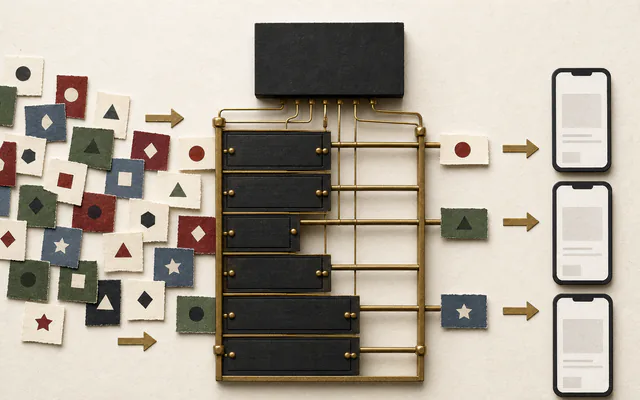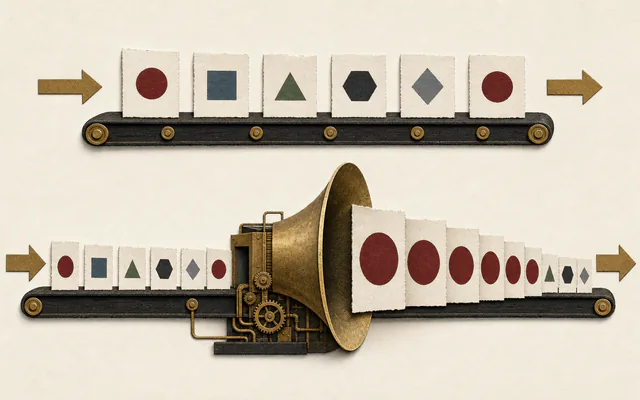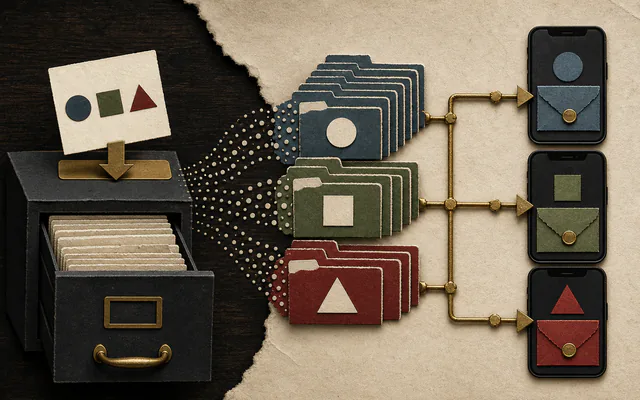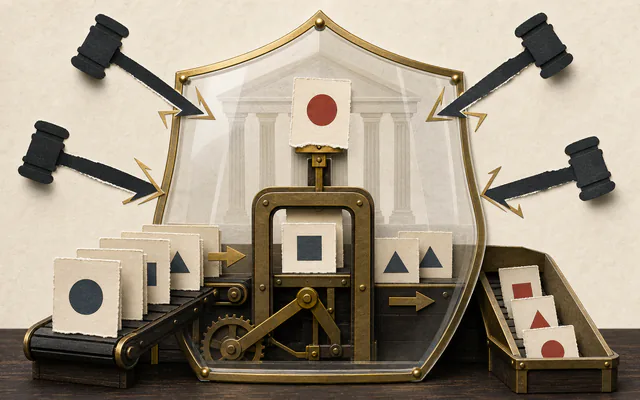
After a 6–3 vote, the city council approved a 12% transit budget increase, funded by parking fees, adding 24 late-night routes.
6–3 vote+12% budgetParking fees+24 routes
A practical guide to reading the news
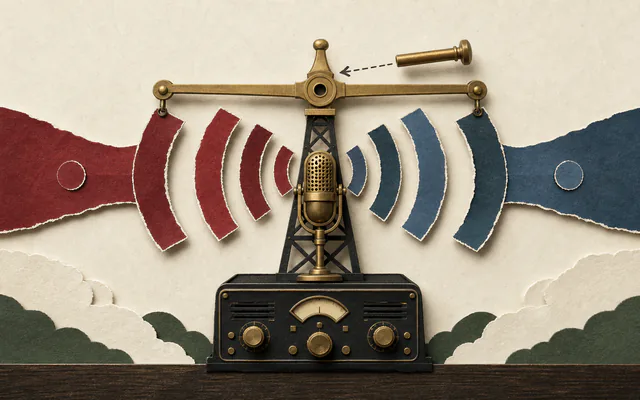
Media bias is the systematic slant in which events get covered, which facts are left out, and how the rest is framed and placed. Two outlets can report the same event and leave you with opposite impressions. This guide shows the five ways that happens, story choice, missing context, language, placement, and your own instincts, so you can compare coverage without being steered by one version of it.
Unbiasable · Updated July 2026
Interactive example
What this guide helps you do
What media bias actually is
Bias often works through ordinary editorial choices. An outlet decides which event deserves attention, which details belong near the top, who gets quoted, and which explanation ties it together. Those choices can be accurate one by one and still point you toward a particular conclusion.
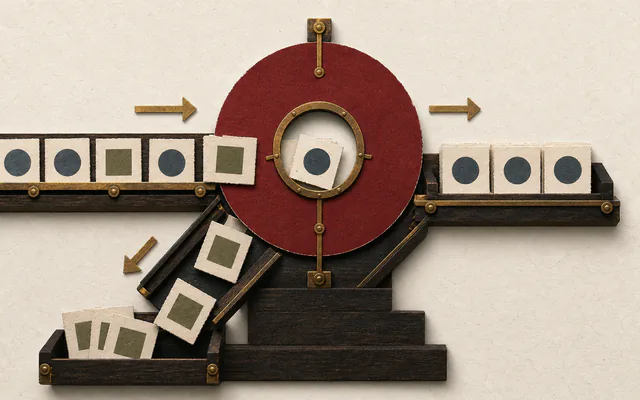
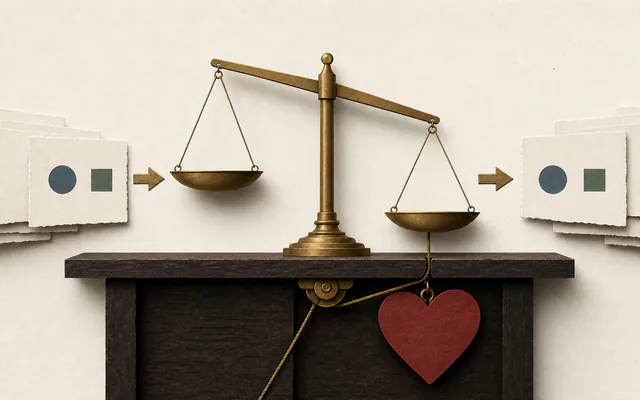
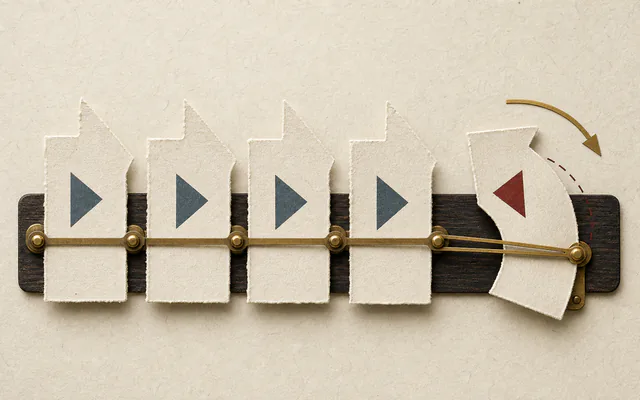
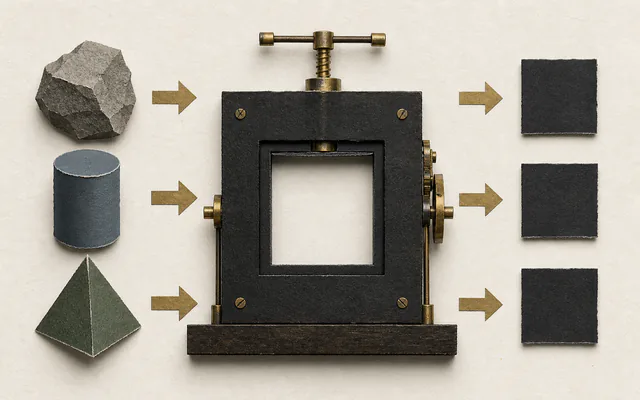
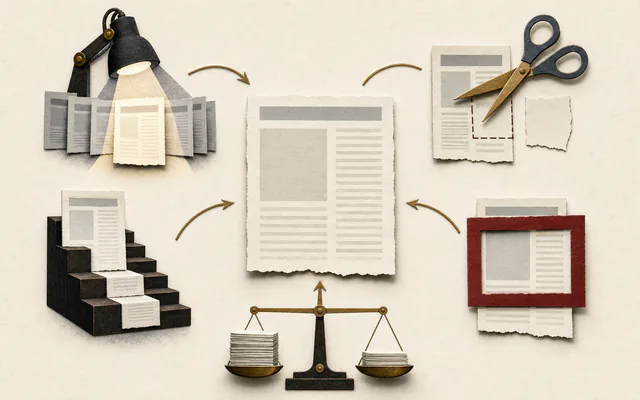
Explore each patternWhich events become news at all.
Which facts, voices, and context are absent.
Which language suggests cause, blame, and stakes.
What leads, what gets buried, and what repeats.
When unequal claims are presented as equally supported.
The biased animal
Before a single editor touches a single story, your brain has already picked a side. Philosophy suspected it in 1620, psychology proved it in a lab in 1960, and neuroscience watched it happen on a brain scan in 2006. Start here, because every other kind of bias is built on this one.
Chapter 1
Once you believe something, your mind quietly hires all incoming evidence to work for the belief. This is the oldest documented bug in human thinking.
Chapter 2
Reasoning feels like a judge weighing evidence. Mostly it works like a lawyer hired by your feelings, and the feelings picked the verdict first.
Chapter 3
Your judgment bends toward your group, your group scores itself as the center of the universe, and both effects predate any newspaper by roughly forever.
Chapter 4
You do not react to the world. You react to a picture of the world your culture handed you in advance, and the news is the picture's main supplier.
The biased medium
News is not a window. It is a series of choices: what to cover, what to skip, which words to use, and where to put it on the page. Communication research spent a century mapping those choices. Here is the machinery, from the people who found each gear.
Chapter 5
Bias almost never looks like lying. It looks like choosing: which stories, which facts, which words, which page. Here are the five choices, each caught in the act by the research that named it.
Chapter 6
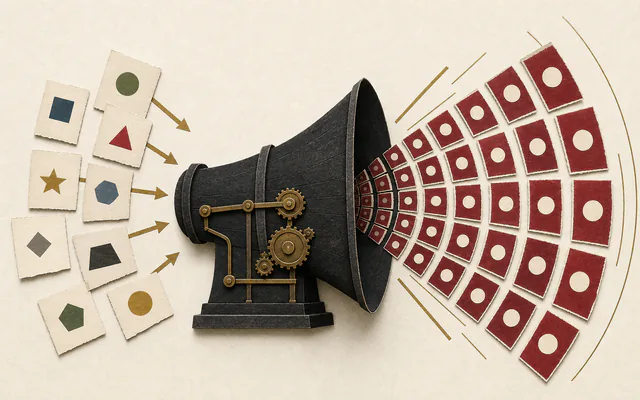
The press does not tell you what to think. It tells you what to think about, and a 1972 study found the match between media emphasis and what voters called important was nearly perfect.
Chapter 7
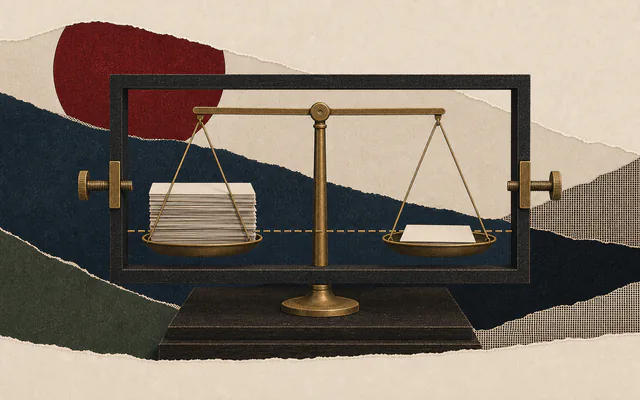
Give two positions equal weight when the evidence behind them is lopsided and the format itself misleads. A 2004 study found 52.65% of US prestige-press climate coverage did exactly that.
Chapter 8
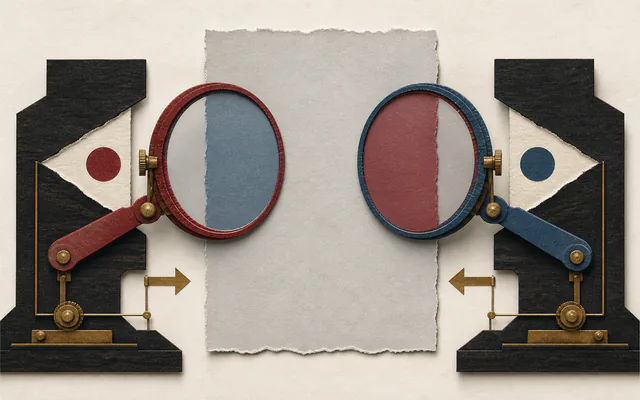
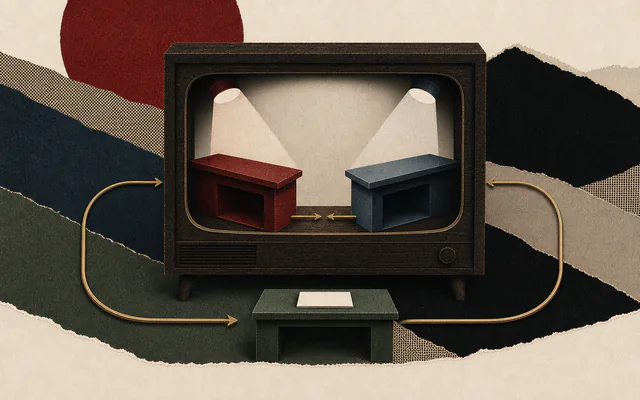
Show two opposing camps the identical newscast and both will swear it favored the other side. This is the finding that explains every argument you have ever had about which outlet is biased.
Chapter 9
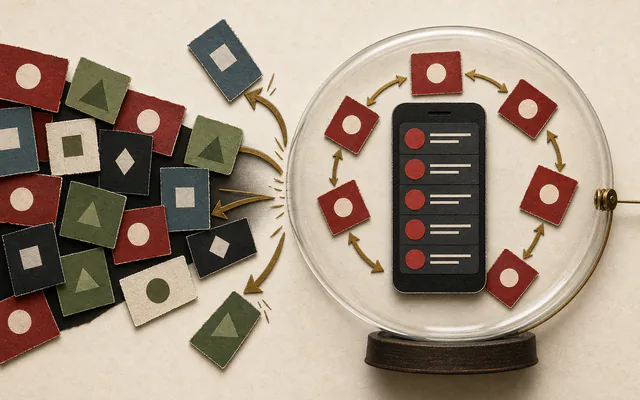
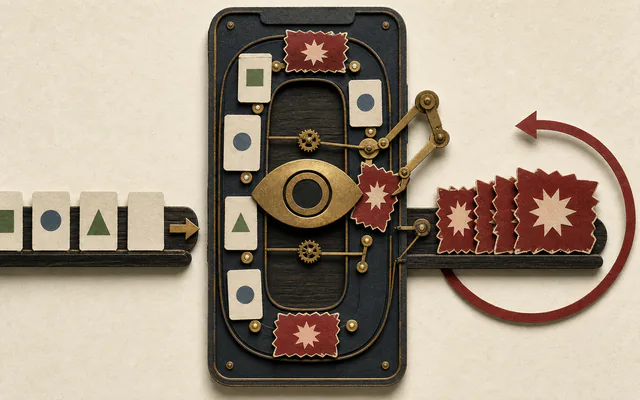
Personalized feeds edit the world down to what an algorithm predicts you want. Eli Pariser named it in 2011, when Google already tailored results on 57 signals about you.
Chapter 10
In the 1920s the alarmed critic and the cheerful practitioner published the same diagnosis: public opinion is manufactured. One called it a crisis. The other called it a career.
The biased republic
The American press was born partisan, got rich on sensation, invented objectivity as penance, was regulated into balance for four decades, then deregulated back out of it. Every era left documents. Here they are, from a 1735 jury room to your feed.
Chapter 11
American journalism did not decline from a golden age of neutrality. There was no golden age. The founding press was open, funded, fighting partisanship, and everyone knew it.
Chapter 12
The 1890s circulation war that turned sensation into a business model, maybe helped start a real war, and scared journalism into inventing ethics.
Chapter 13
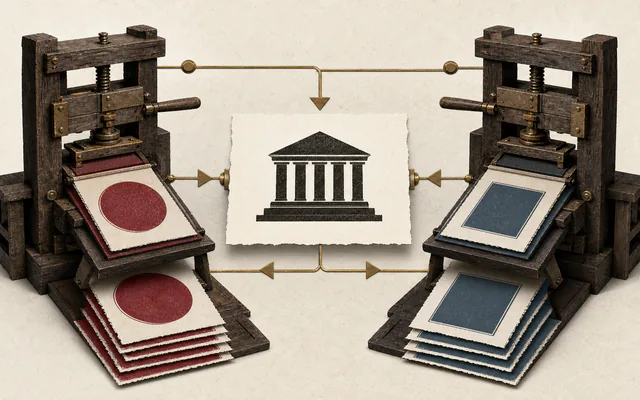
For thirty-eight years, American broadcasters were legally required to air contrasting views on public controversies. Here is the rule, the ruling that blessed it, and the order that killed it.
Chapter 14
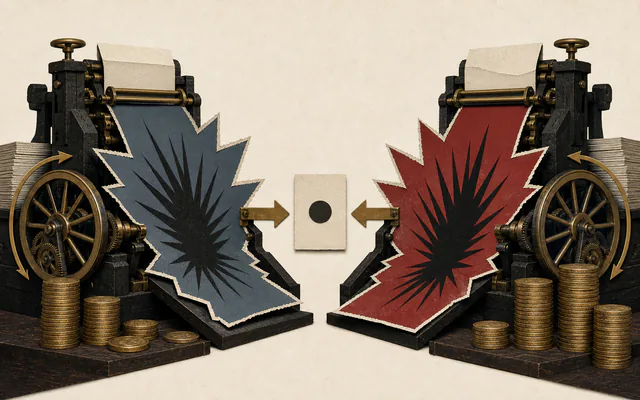
Cable news found that argument is cheaper than reporting and better at holding an audience. By 2012, 85% of MSNBC's airtime was opinion, not news.
Chapter 15
In 1972 seven in ten Americans trusted the news. Now three in ten do. The collapse did not happen all at once, and its turning point explains what trust never recovered from.
The biased machine
For most of this story, a person decided what you saw: an editor, a producer, a censor. Then the decision moved into software tuned to hold your attention, and the gatekeeper stopped being human. Congress heard the warning in 2019, a whistleblower carried out the internal documents in 2021, Twitter published the measurement of its own tilt, a federal complaint showed what a harvest of 65 million profiles could aim at voters, the Supreme Court held that the feed's choices are editorial ones, and a new class of machines learned to generate the evidence itself. This is bias at the speed of a feed.
Chapter 16
A feed ranked for engagement rewards whatever holds you longest, not what informs you best. Tristan Harris told the Senate in 2019 that this system already shaped where 2 billion people put their attention every day.
Chapter 17
A recommendation system now decides what billions of people read before any of them choose. Frances Haugen, who built such systems, told the Senate in 2021 that a $1 trillion company was paying for its profits with users' safety.
Chapter 18
Twitter ran the experiment on itself and published the answer: against a chronological control feed, its ranking amplified the mainstream political right more than the left in six of seven countries. The tilt is measured, not alleged.
Chapter 19
About 270,000 people took a Facebook personality quiz. The app behind it harvested files on 50 to 65 million, Cambridge Analytica scored voters on psychology, and the ads it aimed left no public record. The receipts are government documents.
Chapter 20
Twenty-six words from 1996 mean the feed cannot be sued over what users post, and in 2024 the Supreme Court held its moderation is editing, protected like a newspaper's. The most powerful gatekeeper in the history of news answers to almost no court.
Chapter 21
As fakes get more convincing, the larger danger is that people dismiss real evidence as fake. Two law professors named this the liar's dividend in 2019, the same problem a fluent machine only deepens.
Straight answers
21 chapters across 4 acts. No claim that bias can be removed, only that you can get better at seeing it.
Media bias is the systematic slant in how news is selected, framed, and told: which stories get covered, which get ignored, whose voices carry the story, and which words frame it. It is rarely lying. Most of it is choices, made before you ever see the page.
Every newsroom makes choices, and choices have a direction. That does not make all outlets equally slanted or facts unknowable. It means the useful question is not "is this biased" but "what would this story look like from the other nine worldviews." That comparison is what Unbiasable does every morning.
The big five: selection (which stories run), omission (which facts and voices are left out), framing (which words and angles carry the story), placement (what leads and what gets buried), and false balance (treating unequal evidence as equal). Our types of media bias guide walks through each with examples.
Because seeing bias in one day's headlines is useful. Recognizing the pattern yourself is better. The daily brief shows you where the worldviews split; this guide helps you spot the choices that create the split.
The field guide
The brief puts the day’s claims beside the exact words and evidence behind them. Free every morning.
Arrives around 6am ET. Free, and it stays that way.
Cancel anytime. Nothing on the site goes behind a paywall.
One payment through Stripe. No account needed.