
One of the ten worldviews
Identity
Identity is a single lens holding many community standpoints, Black, Latino, Jewish, Palestinian, LGBTQ, and more, each reading the news through one question the other lenses skip: how does this land on our community? The standpoints often disagree sharply with each other.
What is the Identity lens?
The Identity lens is not a single ideology. It is one lens holding many community standpoints, defined by lived experience rather than by a theory of politics. Its shared move is to read the news through a question the ideological and mainstream lenses routinely skip: how does this land on our community? Internally it is diverse and often opposed.
Two academic ideas sit underneath it. Identity politics, a phrase the Combahee River Collective coined in 1977, names political activity "founded in the shared experiences of injustice of members of certain social groups" (Stanford Encyclopedia of Philosophy). Standpoint theory adds the epistemological claim that knowledge is situated: where you stand shapes what you can see, and a standpoint is an "achieved stance," earned through reflection, not automatic from group membership.
The crucial thing is that there is no single "minority view." These communities diverge from one another, most sharply Jewish and Palestinian or Arab American outlets on Israel and Gaza, but also, say, Black and Asian American framings of college admissions. We analyze this lens for that internal split, and we hold a firm guardrail: surface each community’s perspective as understanding, never as a scoreboard. The goal is empathy, making each community legible to outsiders, not pitting groups against each other.
What holds the lens together
- Lived experience first. A story is read through how it affects a specific community, not through an abstract left-right theory.
- Community impact as the opening question. "How does this land on us?" comes before "who is right?"
- Situated knowledge. Where you stand shapes what you notice, so each standpoint sees things others miss.
- No single minority view. The communities are many and often disagree with one another.
- Belonging over left-right. Identity and community, not the ideological spectrum, organize the reading.
- The guardrail: understanding, not a scoreboard. Differences are surfaced to build empathy, never to declare a winner.
Where it comes from
The phrase "identity politics" was coined in 1977 by the Combahee River Collective, a Black feminist organization, which wrote that "the most profound and potentially most radical politics come directly out of our own identity." Kimberlé Crenshaw later named "intersectionality" (1989) to describe overlapping forms of disadvantage.
Standpoint theory has deeper roots, in Hegel’s master-and-slave dialectic and Marx’s idea that the worker sees capitalism differently than the owner, developed into feminist standpoint theory in the 1980s by thinkers like Nancy Hartsock, Sandra Harding, and Patricia Hill Collins.
The lens becomes concrete in community and ethnic media: the Black press, Spanish-language outlets, the Jewish and Arab American press, LGBTQ publications, and more. These are the outlets that ask the community question first.
Key thinkers
- The Combahee River Collective. Coined "identity politics" (1977).
- Kimberlé Crenshaw. Named "intersectionality" (1989).
- Patricia Hill Collins. Black Feminist Thought; the Black women’s standpoint.
- Sandra Harding. Standpoint epistemology and "strong objectivity."
- Charles Taylor. "The Politics of Recognition" (1992).
- Iris Marion Young. Justice and the Politics of Difference (1990).
The main camps inside it
- Many community standpoints. Black, Latino, Asian American, Native, Jewish, Palestinian and Arab American, Muslim, LGBTQ, women, disability, and more, each its own vantage point.
- They diverge from each other. The sharpest case is Jewish versus Palestinian and Arab American framings of Israel and Gaza; another is Black versus Asian American views on admissions.
- Recognition vs redistribution. A theoretical split (Nancy Fraser) over whether the core injustice is cultural misrecognition or economic inequality.
- Strong vs weak standpoint. Whether a marginalized position grants genuine epistemic privilege, or situated insight that still has to be argued and evidenced.
Common misconceptions
- “Identity politics is a single left-wing ideology.” It is a cross-cutting lens holding many standpoints that often conflict, organized around community and belonging rather than a left-right axis. Identity-based appeals exist on the right too.
- “It means lived experience automatically equals truth.” Standpoint theory holds that a standpoint is an "achieved stance" requiring reflection, not an automatic result of group membership, and its mainstream versions reject naive relativism.
- “It’s just modern "wokeness," a recent invention.” The term dates to 1977, and the underlying epistemology traces back to Hegel and Marx.
- “It privileges one minority view.” There is no single minority view. The lens surfaces multiple, often contradictory community framings, the Jewish and Palestinian split being the clearest live example.
How it differs from neighboring worldviews
- vs Center / Nonpartisan. This is the sharpest contrast. The Center prizes the "view from nowhere," neutral, unsituated reporting. Standpoint theory, which underpins this lens, was built to reject exactly that: it holds that where you stand shapes what you can see, so there is no view from nowhere.
- vs Liberal Mainstream. Liberalism frames equity through universal rights and legal reform; the Identity lens asks first how a specific community experiences a story, and centers what that community centers, which a universal frame can miss.
- vs Communist / Far-Left. The far-left reads through class; the Identity lens reads through community and belonging. A long-running debate, recognition versus redistribution, asks whether the deeper injustice is cultural or economic.
How Unbiasable reads the Identity lens
In the brief, the Identity lens asks the community question first: what does this mean for us, and what are we centering that others ignore, reparations, anti-Asian hate, antisemitism, the occupation, anti-trans law, disability access, tribal sovereignty? We always name which community a framing comes from.
We analyze outlets like The Root, The Forward, Mondoweiss, The 19th, and Al Jazeera for it, and we analyze them against each other. The signal is twofold: what these communities center that others skip, and where they diverge among themselves. We surface that as understanding, never as a contest.
See it in practice in the daily briefs, or step back to all ten worldviews side by side.
The outlets we read for this lens
Identity coverage in the brief comes from these outlets. Each link explains why we file the outlet here and what to expect from its framing.
- The Root. Community impact asked first, race and policing foregrounded, and stories framed by what they mean for Black readers.
- theGrio. Black political and cultural life centered, a mainstream-Democratic lean, and national stories localized to their community stakes.
- Capital B. Deeply reported community stories, an equity frame, and attention to issues national outlets miss.
- La Opinión. Immigration covered from the inside, US news read for its Latino-community impact, and Latin American stories given full weight.
- Latino USA. Narrative storytelling, identity and belonging as themes, and national issues seen through Latino lives.
- AsAmNews. Anti-Asian hate and representation foregrounded, and national stories surfaced for their AAPI-community angle.
- The Forward. Jewish-community stakes centered, antisemitism tracked closely, and internal Jewish debate aired rather than flattened.
- Algemeiner. A robust pro-Israel frame, close coverage of antisemitism, and politics read through Israel’s security.
- Mondoweiss. The occupation centered, an anti-imperial read on US Middle East policy, and framings that rarely appear in Western mainstream coverage.
- Al Jazeera. The Middle East covered from a regional, Arab-audience vantage, conflict duration emphasized, and US power read critically.
- The Advocate. Anti-trans legislation and LGBTQ rights foregrounded, and national politics read for what it means to queer readers.
- The 19th. Gender and policy covered together, reproductive rights tracked closely, and representation treated as a live issue.
- Indian Country Today. Tribal sovereignty and treaty rights foregrounded, federal policy read for its impact on Native nations, and Indigenous voices centered.
- MuslimMatters. Civil liberties and anti-Muslim bias foregrounded, and news read through its impact on Muslim communities.
- Disability Scoop. Access, services, and disability policy foregrounded, and stories framed by their effect on disabled people and families.
- Washington Blade. Expect original reporting on LGBTQ policy, courts, and global queer rights that mainstream desks pick up later, plus community news from Washington. Political coverage is measured but never neutral on questions of LGBTQ rights themselves.
- Rafu Shimpo. Expect community journalism first: local institutions, obituaries, Little Tokyo. National politics appear when they touch civil rights, immigration, or historical memory, where the paper writes with the authority of a community that has seen federal power misused.
The issues Identity outlets covered most
Each issue page sets their coverage beside the other worldviews and lists the people on the record.
Further reading
Both camps, and the critique
Paid links. If you buy a book through these links, Bookshop.org pays us a small commission and sends a share of the sale to independent bookstores.
-
Makes the case
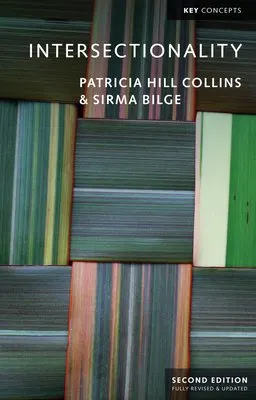
Intersectionality (opens Bookshop.org)
Patricia Hill Collins and Sirma Bilge · 2016
Sociologists Patricia Hill Collins and Sirma Bilge define intersectionality as a way of analyzing how race, class, gender and other categories combine to shape power and inequality, and as a tool for activism.
-
Makes the case
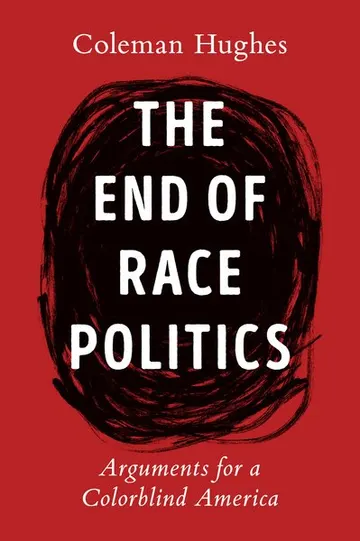
The End of Race Politics (opens Bookshop.org)
Coleman Hughes · 2024
Writer Coleman Hughes argues that Martin Luther King's colorblind principle is the right ethic, and that race-conscious policy and identity-based frameworks deepen the divisions they aim to heal.
-
The critique
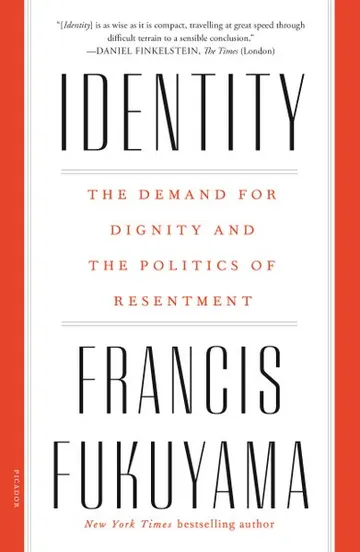
Identity (opens Bookshop.org)
Francis Fukuyama · 2018
Francis Fukuyama traces the modern politics of identity to the human desire for recognition, and argues that both left and right versions fragment democracies unless anchored in shared national identities.
Frequently asked
What is the Identity lens?
A single lens holding many community standpoints, each reading the news through "how does this land on our community?" The standpoints often disagree sharply with one another.
What is identity politics?
Political activity grounded in the shared experience of a social group, a phrase coined by the Combahee River Collective in 1977. It centers how policies and events affect specific communities.
What is standpoint theory?
The idea that knowledge is situated: where you stand shapes what you can see, so a marginalized vantage point can reveal things a "view from nowhere" misses. A standpoint is earned through reflection, not automatic.
Is identity politics only left-wing?
The academic concept originated on the left, but identity-based appeals exist across the spectrum, including white-identity politics on the right. As a lens, it is about community and belonging rather than left or right.
Why do these communities disagree with each other?
Because each reads the news from its own history and stakes. The clearest example is the opposite framings of Israel and Gaza in Jewish and in Palestinian or Arab American outlets.
Does the Identity lens say one group is right?
No. The brief surfaces each community’s perspective as understanding, never as a scoreboard, and never declares a winner or treats any community as monolithic.
What is intersectionality?
Kimberlé Crenshaw’s term (1989) for how overlapping identities, such as being both Black and a woman, create forms of disadvantage that a single-axis view misses.
What counts as identity or community media?
Outlets that serve and report for a specific community, such as the Black press, Spanish-language networks, the Jewish and Arab American press, and LGBTQ publications.
References and further reading
- Identity Politics · Stanford Encyclopedia of Philosophy
- Feminist Social Epistemology (standpoint theory) · Stanford Encyclopedia of Philosophy
- The Combahee River Collective Statement (1977) · Teaching American History
External sources are provided for verification. Unbiasable is independent and not affiliated with them.
Every side, every morning
Identity is one view of the room. See all ten.
One short brief lays the same news across ten worldviews, in each camp’s own words. Free every morning.
Arrives around 6am ET. Free, and it stays that way.
Cancel anytime. Nothing on the site goes behind a paywall.
One payment through Stripe. No account needed.