
"These increases are the direct product of the US war of aggression against Iran," the WSWS wrote, and it traced the cost through diesel, fertilizer and interest rates to the bond market. It cast the burden as a class transfer: "The workers thus pay for the war twice: at the pump and in the interest on their own debts." It dismissed the Democrats' affordability pitch, writing that "Their objection to the war in Iran is that it is the wrong war."
Camp by camp · Updated October 18, 2026
Economy, jobs & inflation
How 10 of the ten camps framed it, in their own words, then everyone on the record beneath that — March 26, 2026 to October 18, 2026. Each camp section is that camp's own outlets writing. The people below are grouped by who spoke, not by camp: an outlet can quote anyone, so the outlet it ran in tells you who carried the words, never whose politics they are.
10/10 camps on the record
the record here 82 camp reads 412 quotes 93 people 4 checkable claims 1 running story
Communist / Far-Left 9 reads · 6 outlets
Democratic Socialist 11 reads · 6 outlets
Liberal Mainstream 17 reads · 8 outlets
Center / Nonpartisan 13 reads · 5 outlets
Establishment / Center-Right 6 reads · 5 outlets
Libertarian 5 reads · 4 outlets
MAGA / Populist Right 7 reads · 7 outlets
Religious Right 5 reads · 3 outlets
Identity 3 reads · 3 outlets
Tech / AI 6 reads · 4 outlets
Communist / Far-Left
"The official effort to spin stagnation and declining real wages as prosperity is exposed by the experience of workers," the WSWS wrote. It noted that stocks rose because hiring was weak, reading Wall Street's relief as indifference to workers. It was the only camp to list the 129,000 financial-sector jobs lost since May 2025.
"the expression of demands in the financial markets" is how the WSWS described the vote, rejecting Trump's claim that a political committee forced it. It is the only camp that tied the hike to more than $40 trillion in federal debt, writing that Warsh avoided that subject.
"The Iran war has proved to be the greatest US strategic mistake in its history." The far left is the only camp that filed the war inside the bond market, reporting that the average interest rate on publicly held US debt rose from 1.57 percent on $20 trillion in 2016 to 2.59 percent on $40 trillion now, and that Japan has spent roughly $96.5 billion defending the yen in coordination with Washington. It treated the Strait as a solvency question rather than a shipping one.
"The largest initial public offering in history is going to dump 30% of its supply on retail buyers." The Marxist-tech frame reads the SpaceX IPO and the fast-entry index rules as a structured transfer of risk from insiders to ordinary 401(k) holders. Of $80 billion raised, less than a quarter goes to building anything; the rest pays down xAI debt and lets early investors cash out. The valuation rests on a fictitious AI market projection, 93% of the company's claimed value is a bet on AI revenue that doesn't exist.
Shadow banking by another name. Second Thought defines "private credit" for a general audience and argues the rebranding from "shadow banking" to "private credit" is itself a political act, a way of making unregulated lending sound like a feature rather than a bug. The frame is regulatory capture: the financial industry renamed the risk and lobbied the name into respectability. The systemic comparison is to 2008, but the argument is that the leverage is now more opaque.
"Trillionaire fascism." CounterPunch uses the word deliberately. The argument is not that Musk is a fascist in the historical-movement sense but that extreme wealth concentration fused to state power, which describes Musk's relationship to the US military-industrial complex, is a structural form of fascism. The title is a thesis, not a slur.
"Solidly entrenched." The second CounterPunch piece grounds the Musk milestone in data on wealth concentration. The milestone is framed as evidence of a structural condition, not an individual achievement.
1 more read from this camp, in the daily briefs.
Democratic Socialist
"Trump appeared to ignore entirely the fact that most Americans are feeling economic pinches," Truthout wrote, setting his campaign claims against a Pew survey. It led with hardship numbers, reporting that "44 percent say they have had trouble paying for at least one basic necessity over the past year." It quoted the administration's earlier promises that gas prices would fall.
Truthout Oct 15 that day's brief ›
Hasan Piker said a ban "will offer modest respite in the short term and will lead to catastrophic failure in the long term," and conceded of the oil lobby, "They're not entirely wrong about this." He then argued the industry opposes the ban because high global prices are paying it well.
"Trump's illegal war with Iran" is the socialist left's standing label, and it filed the strikes inside Republican internal polling rather than inside the Gulf, reporting a GOP operative's line that "Gas is about $4 a gallon. We can't message that away" and another source's admission that candidates cannot distance themselves from the president. It is also the only camp that printed the transportation secretary's attempt to blame Russian diesel exports and then answered it.
Truthout Sep 7 that day's brief ›
"The Iran war's ripple effects have hit the state hard" is the socialist left's angle, and it is the only camp that converted the war into a Michigan ballot issue, reporting a state economic impact expected to top $2 billion, West Michigan families paying $15 to $20 a week more for gas, and farmers facing as much as $22,000 more this season.
Jacobin Aug 28 that day's brief ›
"gas prices are up and you said they'd go down" is how the socialist left connected the numbers to the war, arguing that the same voters leaving the president are the ones paying for a conflict he started. It was the only camp to tie the jobs figures directly to the reported deaths of American service members and the administration's supplemental funding request.
"We Must Act Now." Cenk Uygur reads the economists' statement as vindication of alarm, warning of "an enormous amount of unemployment" and noting "white collar payrolls have been contracting now for years."
Frames Trump's refusal as proof of "complete indifference to the cost squeeze on American families." Quotes Warren that prices are up across "groceries, healthcare, virtually everything Americans buy because of Donald Trump's policies." Treats the housing bill as inadequate but worth signing.
Truthout Jun 25 that day's brief ›
Who holds the bag. Novara frames private equity not as a financial sector story but as a class story: firms extracted value from productive enterprises, loaded them with debt, and are now attempting to sell into a market that has priced in continued growth. The implicit question is who absorbs the loss when the exits close. Novara's answer is workers, pension funds, and the public sector.
Novara Media Jun 21 that day's brief ›
3 more reads from this camp, in the daily briefs.
Liberal Mainstream
"For the third straight month, workers' paychecks did not keep pace with rising prices," USA Today opened, making wages the frame. It printed both Democratic Rep. Brendan Boyle's blame for the Iran war and tariffs and Kevin Hassett's view that the energy surge is temporary. On video, David Pakman argued "Trump's tariffs and Iran war can't possibly be Biden's fault because they are Trump's policies."
USA Today Oct 15 that day's brief ›
also cited USA TodayCBS NewsYouTube: David Pakman
"Yes, a significant slowdown in the same way that a car significantly slows down when it crashes into a brick wall," Brian Tyler Cohen said, before playing administration officials praising a "Goldilocks economy." He set 29,000 against Biden-era reports that Republicans called disappointing.
ABC wrote that the price spike is "fueling Democratic efforts to retake control of Congress by harnessing anger over runaway costs and an unpopular overseas conflict," and it quoted Democratic candidates in Kansas and Virginia citing farmers. MSNBC opened on Sen. Dan Sullivan calling diesel "too damn high" and listed Republicans turning against the war.
ABC News Sep 24 that day's brief ›
also cited MSNBC
"defying Trump and signaling a potential new wave of rate hikes" is USA Today's summary of Warsh's first major move. Its live coverage paired the decision with household costs on credit cards and personal loans and with the Dow's 600-point drop.
USA Today Sep 17 that day's brief ›
"Higher oil prices increase inflation, and they have sent the average cost for a gallon of regular gasoline to $4.01" is the mainstream left's framing, and it is the camp that filed the war as a price story, running the Brent figure at the top of the live blog alongside the strike. CBS was also the only outlet to print former Mossad chief Yossi Cohen's claim that Israeli spies "toured the Fordow nuclear site many times to understand the site."
CBS News Aug 12 that day's brief ›
"This is not a labor market that's reaccelerating despite speculation to the contrary earlier this year." The mainstream left did the sector-by-sector work, reporting that health care was the only industry with notable gains and that Glassdoor's employee confidence index hit a record low in July. MSNBC covered the same data as a political problem, with Nicolle Wallace calling the president's economy a "dumpster fire" and a "fire-alarm political fire" for his party. Politico printed the president's own account: "They're angry at Republicans. But they're not angry at me."
USA Today Aug 8 that day's brief ›
"would in effect transform the Federal Reserve's for-cause protection into at-will employment" is the line the mainstream left pulled from Roberts's June opinion, and it framed the new letter as an attempt to satisfy the procedure the Court identified rather than to answer the substance. The Guardian was alone in placing the effort inside the longer campaign against the central bank, noting the dropped Justice Department investigation into Jerome Powell's renovations and Kevin Warsh's insistence that "We're an independent central bank."
CBS News Aug 8 that day's brief ›
also cited The Guardian
"A divided Federal Reserve stayed on the sidelines" is the mainstream lead, and USA Today's live coverage kept returning to the same unanswered question its reporters put to Warsh: what news there was for Americans, given the lack of action. David Pakman took the political read on the same economy, telling viewers Americans are "confronting the largest grocery price spike in half a century" and pointing out that the New York Post is now reporting it.
USA Today Jul 30 that day's brief ›
also cited YouTube: David Pakman Show
9 more reads from this camp, in the daily briefs.
Center / Nonpartisan
"The elections are being fought over cost-of-living pressures across the US," the BBC wrote in an explainer that walked through gasoline, tariffs and the Fed's 2% target. Its companion piece built the story from households, writing that "all of this has landed on the shoulders of everyday Americans." PBS paired the COLA news with expert caution that Medicare premiums could eat into it.
BBC News Oct 15 that day's brief ›
also cited BBC NewsPBS NewsHourYouTube: PBS NewsHour
"The BLS report stands in sharp contrast to President Donald Trump's insistence that America's economy is booming," the BBC wrote, while quoting economists who called the number "not disastrous." PBS gave Cleveland Fed President Beth Hammack room to say she doesn't make much of one report and worries more about inflation.
BBC News Oct 3 that day's brief ›
also cited PBS NewsHourPBS NewsHour
PBS reported that diesel "is straining businesses and threatening to raise costs across the economy," and let a farmer, a food bank, a trucker and an equipment renter describe it. It printed John Boyd of the National Black Farmers Association saying farmers are "the first in line that are paying for this administration's mistakes."
PBS NewsHour Sep 25 that day's brief ›
"'reassuring' sign Fed is acting independently" is the frame PBS put in its headline, from economist Julia Coronado. BBC headlined the same event as a hand-picked chair who "defied" Trump, and filled its report with mortgage and prime-rate figures. Both wire-tier outlets treated central bank independence as the story.
PBS NewsHour Sep 17 that day's brief ›
also cited PBS NewsHourBBC NewsBBC NewsBBC News
"It's never been more expensive in the U.S. to fill up the tank" is the wire tier's opening, and AP is the only camp that set the record beside the old one and then went to the pump, quoting a Philadelphia mother who has stopped taking weekend trips because "Gas is pretty high right now." It also pressed the energy secretary and printed his non-answer alongside his forecast that futures prices point lower. The BBC covered the same number from the driver's seat rather than the market.
Associated Press Sep 8 that day's brief ›
also cited BBC News
"higher diesel prices mean higher transportation costs for a long list of everyday goods." The wire tier converted the war into a grocery bill, devoting most of its space to freight, refrigerated produce and package surcharges rather than to the strikes, and it is the only camp that printed both the nominal record and the inflation-adjusted comparison showing 2022 and 2008 were worse in real terms. BBC noted in its own voice that "Rocketing pump prices have angered US voters ahead of the crucial midterm elections in November." At the White House, PBS reported Vance's three different Hormuz figures side by side without adjudicating them.
Associated Press Sep 4 that day's brief ›
also cited BBC NewsPBS NewsHourBBC News
"Labour force participation is back at levels not seen since the days of Covid, meaning jobs just aren't being created." The wire tier led with the miss against expectations and then pivoted to what the numbers do to the Federal Reserve, noting that weak hiring "will ease the pressure to hike rates" even with inflation running at 3.5 percent. PBS brought on an economist who called it "a real wakeup call, definitely a bleak report" and flagged a detail no other outlet pursued: wage growth at a five-year low.
BBC News Aug 8 that day's brief ›
also cited YouTube: PBS NewsHour
"The latest White House letter largely rehashes the year-old allegations." The wire tier was the only tier to explain the underlying mortgage question in full, reporting that buyers get lower rates on primary homes than on second homes, that Cook's lawyer calls the Atlanta filing "an isolated notation," and that an earlier application to the same lender called the same condo a vacation home. PBS published the letter itself.
Associated Press Aug 8 that day's brief ›
also cited PBS NewsHour
5 more reads from this camp, in the daily briefs.
Establishment / Center-Right
The Bulwark's economics show discussed "the impact of immigration and tariffs on the labor market" and Trump's suggestion that inflation could pay off the debt. Its morning newsletter ran the number under a headline about Trump's mental state.
The Bulwark Oct 3 that day's brief ›
also cited The Bulwark
The Journal made the lobbying the story: when the industry heard Trump endorse a ban, "it pulled out the bazooka." The Bulwark cast the season ahead as a Democratic closing argument about heating bills, writing that costs are rising "because of Donald Trump’s war of choice in Iran."
Wall Street Journal Sep 24 that day's brief ›
also cited The Bulwark
"he has only himself to blame" is The Bulwark's verdict, arguing tariffs and the Iran war pushed prices up and boxed the Fed in. The Dispatch ran the question of whether Warsh can tame inflation.
The Bulwark Sep 17 that day's brief ›
also cited The Dispatch
"The numbers for the jobs came out this morning and they sucked." The anti-Trump right treated the revisions as the real story, arguing that a labor market previously described as resilient was never as strong as reported, and singling out manufacturing: employment in the sector is down about 75,000 since the administration took office despite July's 5,000-job gain.
YouTube: The Bulwark Aug 8 that day's brief ›
also cited The Bulwark
"the largest supply disruption in history." The institutional right's surprise is that the disruption did not break anything: stockpile draws, non-Hormuz pipelines and Chinese demand destruction capped prices below $100. Its scorn is reserved for the deal, which it reads as a document written by an adversary Washington never bothered to understand.
The Dispatch Jul 10 that day's brief ›
also cited The Dispatch
"Attacks on America." National Review frames Musk's wealth as a proxy for American achievement and entrepreneurship. Criticism of his net worth is read as envy-driven hostility to success itself. This is the purest articulation of the conservative wealth-as-virtue argument.
Libertarian
"Trump has remained in denial about how bad inflation is" is Reason's read of the president's reaction. Its roundup took its headline from Trump's own post and quoted his claim that the board was "very hostile."
, "If politicians really do actually believe that food should be more affordable, there's plenty they could do. They could take off all the tariffs on food." The libertarians did the only actual price reporting of the week, running the numbers on general inflation versus specific market effects with a Cato economist who separated the two, and warning that lecturing consumers "is sure to backfire at the ballot box." Their second piece read the fight as a proxy for the war split, with hawks wanting tariffs killed and populists wanting the war defended. The Mises Institute framed it as "a mask-off moment over generational contempt, foreign policy, and neoliberal economics."
Reason.com Aug 7 that day's brief ›
also cited Reason.comReason.comMises InstituteYouTube: Dave Smith
Mises frames Warsh's arrival as a stress test for the institution. "Showtime" means the task force is either the beginning of genuine monetary reform or a stalling mechanism. Mises wants a commodity-anchored system; Warsh is not that, but he is an opening.
The Free Press celebrates without reservation. SpaceX is the company that did what NASA could not, cheaper and faster, and the IPO is evidence that private capital allocates risk better than government programs. Musk's trillion is the reward for building something real. The framing is uncomplicated in a way that distinguishes it from every other outlet: this is capitalism working as intended, and the critics are envious.
The Free Press Jun 15 that day's brief ›
Mises frames the trillionaire threshold not as a story about Musk but as a story about money supply. A 49-month high in money supply growth means paper net worth numbers are inflated by monetary policy, not productivity. The libertarian critique and the socialist critique reach the same conclusion -- Musk's wealth is a distortion -- from opposite premises: Mises says the government caused it by printing money; the left says the government caused it by awarding contracts.
MAGA / Populist Right
"However, inflation has risen 14% since January 2022," the Daily Wire wrote, measuring prices from the Biden years and running the COLA as its inflation story without the September 3.7% figure. It then turned to past calls to privatize Social Security. The Blaze took on Democrats instead: "Just in time for election season, climate leftists have discovered the price of gasoline," it wrote, blaming state climate fees in California, Washington and Oregon.
The Daily Wire Oct 15 that day's brief ›
also cited The Blaze
"The diesel panic cure could make the disease worse" was the Blaze's argument, carrying a policy analyst's case against the export ban some Republican senators want. Fox gave its platform to Rep. Randy Fine, who said Democrats side with Iran out of hatred for Trump. Neither outlet addressed the drug-factory remark.
The Blaze Oct 4 that day's brief ›
also cited Fox News
Fox described the ban as "a proposal economists warned could have ultimately driven up costs for American consumers and businesses," reporting the White House retreat without criticizing Trump for floating it. The Federalist wrote that "the issue centers on a relative lack of refining capability" and urged pressure on Ukraine to stop hitting Russian refineries, and Tucker Carlson argued "refineries are actually the most important link in the chain" while asking why belligerents keep targeting them.
Fox News Sep 24 that day's brief ›
also cited The FederalistYouTube: Tucker Carlson
"confident in the resilience of the economy" is how Breitbart described the Fed's reasoning, leading with Warsh's line that the economy "appears to be strengthening." Two of four populist-right receipts stressed that Trump spared Warsh personally, with the Daily Wire headlining that he gave Warsh "A Pass." The Blaze reported markets turned green right after the announcement.
Breitbart News Sep 17 that day's brief ›
also cited Breitbart NewsThe Daily WireThe Blaze
"a roaring comeback for America's auto industry" is how OAN characterizes the visit, quoting United Auto Workers member Brian Pannebacker crediting Trump directly: "We can thank this gentleman right here for all these jobs coming back."
"The left isn't happy about it." The Blaze centers the employees, not the CEO. The implicit argument is that anger at Musk misses who actually benefited: working-class engineers and technicians, not just executives. This is populist capitalism's strongest case.
Blaze Media Jun 19 that day's brief ›
"Inflation slowed... even while" is the hedge. Breitbart reports the same 4.2% number The Guardian leads with, but frames it as monthly deceleration rather than as a war cost — the mirror image of the Guardian's choice, from the same data point.
Breitbart Jun 10 that day's brief ›
also cited Breitbart News
Religious Right
TAC filed the number in its daily Iran war log, reporting inflation rose "as conflict in the Middle East pushed up energy prices." It placed the report beside Trump's rally threat to strike Iran again, treating prices as a war cost. It was the only TAC piece on the data.
"Employment and stock markets have remained strong in 2026, despite headwinds like weak consumer sentiment and tightening credit," TAC wrote in a four-sentence brief, the most upbeat reading of any camp. It noted analysts lowered the odds of an October rate hike.
"$1.38 a month in interest on a $6,600 card balance" is the figure CBN chose, framing the hike as small for households and pointing instead to diesel costs. The American Conservative ran a four-sentence item noting the Dow's 631-point drop.
CBN News Sep 17 that day's brief ›
also cited The American Conservative
"Economists surveyed by Bloomberg had projected 80,000 job gains in July." The paleoconservative right filed the shortest and flattest account of any camp, adding one figure the others left out: 5.9 million Americans want a job, including 1.8 million who searched within the past year but not in the four weeks the survey requires.
The Christian Post leads with economic relief: lower gas prices are the frame. The article mentions broader regional questions, Israel's position, Iranian dissidents' concerns, but the headline embeds a prosperity gospel logic: God-aligned leadership produces material blessing for Americans.
Identity
"Rising energy prices are pushing inflation higher again" is Al Jazeera's frame, placing the US decision inside a global wave of rate increases driven by the Strait of Hormuz disruption.
Al Jazeera Sep 17 that day's brief ›
"Notably, Cook has never been charged with a crime, nor convicted of any wrongdoing, in the year since the accusations surfaced." The Black press put the absence of charges in its second paragraph rather than its tenth, and it was the only outlet to connect the removal attempt to the vacancy it would create, noting that a successful firing lets the president install an ally subject to Senate confirmation.
TheGrio Aug 8 that day's brief ›
"I've done more for you than your parents" is the boast theGrio centers, pairing it with Bureau of Labor Statistics data showing "75,000 manufacturing jobs were lost since he returned to office in 2025" and a Democratic strategist's argument that Trump's celebration of America's 250th anniversary shows "no recognition of how this country was built" by enslaved and immigrant labor.
theGrio Jul 28 that day's brief ›
Tech / AI
"the rest of the economy would be in freefall without it." The technology press is the only camp treating the buildout as a macroeconomic trap rather than a local one, reporting PricewaterhouseCoopers' projection of $31.6 trillion in global data center spending by 2050, with more than $15 trillion in the US, and setting that against the collapse in non-data-center construction spending.
Futurism Sep 4 that day's brief ›
"I'd like to know exactly what the actions are." Noah Smith declines to sign, arguing "steering" AI toward complementing humans is "basically impossible" because "no one actually knows how a technology will complement or substitute for human labor," and citing flat employment data.
Noahpinion Jul 15 that day's brief ›
The job math is "so bad that they sound like a joke." Futurism does the arithmetic nobody else does: $1.3 billion in Cedar Rapids capital for a guaranteed 61 permanent jobs, or $21.3 million per job, and reports that Georgia, Virginia and Texas each forgo more than $1 billion a year in data-center tax breaks. It is the only outlet to cite the Turner & Townsend finding that 87 percent of global construction markets now face shortages of mechanical, electrical and plumbing specialists because AI projects are outbidding housing.
Futurism Jul 14 that day's brief ›
"Quite a bad night." Futurism, the tech-critical outlet, leads not with the trillion-dollar valuation but with the stock's actual first-day performance. The juxtaposition of milestone and market reality is the argument.
Futurism Jun 19 that day's brief ›
"Why aren't oil prices higher?" is the puzzle Wired frames as systematic market mispricing. The Strait has been functionally closed for 100 days -- longer than any previous closure in modern history -- yet markets have priced in a quick reopening that the deal may or may not actually deliver. Wired reads the war through energy markets; the ceasefire's credibility will be tested in prices before it is tested in diplomacy.
Wired Jun 15 that day's brief ›
"A black box." 404 Media documents that Amazon data center costs are hidden behind utility NDAs, that residential customers absorb a 7% electricity rate increase with no separate disclosure, and that this is happening at a moment of concurrent economic stress from gas prices and federal benefit cuts. The article connects AI opacity claims (companies say their models are mysterious black boxes) to the opacity of their infrastructure contracting. The mechanism: a regulated monopoly socializes corporate capital costs, privatizes the profit.
404 Media Jun 12 that day's brief ›
The stories behind it
Claims on the books
Open President Donald Trump Sep 13
“If the Republicans win, you win with us, and you get $5,000.”
Open Patrick Morrisey Aug 31
“By statute, 50% of the proceeds … will be dedicated to directly reducing and ultimately eliminating the state income tax.”
Open Trump Jul 24
“Electricity bills for American families will actually come down”
Contradicted David Friedberg Jun 17
“There is no job loss with AI. I will say it again.”
On the record
Grouped by who said it. The outlet named under each quote is who carried the words.
Kevin Warsh Fed chairman 30 on this issue
“The least well-off are the ones who have the most to gain from stable prices.”
on Warsh defending the rate hike as best for lower income Americans
Sep 17 via PBS NewsHour
“There's no hiding from hotspots around the world and our judgment about what is the most likely or least likely of the geopolitical situation has changed.”
on justifying the rate hike without naming Trump's Iran war as the cause
Sep 17 via The Bulwark
“Our decision comes at a time when the economy appears to be strengthening,”
on the Fed's first rate hike in three years
Sep 17 via Breitbart News
Vivek Ramaswamy 29 on this issue
“Property tax relief is finally on the way.”
on property tax relief arriving, posted by Vivek Ramaswamy on X
Oct 15 on @VivekGRamaswamy
“Lower taxes. Lower costs. Bigger paychecks. Let’s get it done.”
Oct 13 on @VivekGRamaswamy
“Started the day with a great morning in Cleveland, finished the night strong in Youngstown. We’re going to bring higher paying jobs & lower costs to northeast Ohio at a scale beyond anything we’ve seen.”
on Ramaswamy's campaign stops in Cleveland and Youngstown, Ohio
Oct 13 on @VivekGRamaswamy
Rand Paul committee chairman 28 on this issue
“Socialism is the problem, not the answer.”
Oct 15 on @RandPaul
“I have been fighting to audit the Federal Reserve for years because hardworking Americans deserve transparency from Washington’s most secretive institution. Inflation is squeezing families, and interest rates are climbing. My Audit the Fed Act would show Americans exactly how the Fed operates and who benefits.”
Oct 12 on @RandPaul
“The last thing Americans want or need is higher taxes, especially when the price tag comes to $355,000 per American household.”
Oct 11 on @RandPaul
Bernie Sanders US Senator, I-VT 26 on this issue
“No, Mr. Trump. America is not making “a fortune” off high gas prices, but your Big Oil pals are. The average U.S household got $2,000 poorer as a result of the Iran War, while Big Oil got $125 billion richer this year. End this war. Put a windfall profits tax on Big Oil.”
Oct 17 on @SenSanders
“Trump says: “This is the greatest economy ever.” Really? While billionaires got $2.2 trillion richer in the past year, nearly half of Americans have trouble paying for healthcare, housing, transportation or food. Trump’s economy: Great for billionaires, a disaster for workers.”
Oct 15 on @SenSanders
“Billionaires pay the same amount into Social Security as someone making $184,500. If we ended that absurdity & applied the payroll tax to all income above $250,000, Social Security would be solvent for 75 years & benefits would be expanded by $2,400. Let’s do it.”
Oct 15 on @SenSanders
Donald Trump US President 25 on this issue
“Between our TOTAL CONTROL of the Strait of Hormuz, and this great announcement on Russian Energy, Diesel Prices for Americans and, indeed, the World, will be COMING DOWN, IN RECORD NUMBERS, AND FAST!”
Oct 11 via CNN
“The typical trucker will save more than $100 every time they fill up”
Oct 6 via CBS News
“The only thing we're doing badly at is public relations.”
Oct 4 via PBS NewsHour
David Frum 20 on this issue
“With all that's going on in France, bond markets still regard France as a sounder credit than the US. Here's part of the reason why: relentless attempts to punish Federal Reserve governors who won't cut short-term interest rates at the president's dictate. https:// wsj.com/economy/centra l-banking/trump-announces-committee-to-investigate-fed-governor-lisa-cook-bcd509fa?mod=hp_lead_pos1 …”
Oct 10 on @davidfrum
“As riots convulse French cities, France pays 4.845% to borrow money for 10 years. https:// cnbc.com/quotes/FR10Y-FR Meanwhile, the Trump-led US must pay 5.244% for 10-year money. https:// cnbc.com/quotes/US10Y”
on French and US 10-year borrowing costs during riots in France
Oct 10 on @davidfrum
“And yet France can still borrow 10-year money a quarter-point more cheaply than Trump's USA, in part because Trump actually *did* prosecute central bankers.”
on France borrowing more cheaply than the US despite Trump's prosecution of central bankers
Oct 7 on @davidfrum
Scott Bessent US Treasury Secretary 20 on this issue
“We believe that the yields don’t reflect the underlying fundamentals.”
on defending Treasury's bond buyback despite yields rising the next day
Aug 21 via Associated Press
“We were left with a mess. The Biden administration had the highest deficit-to-GDP in history when we weren't at war or weren't in a recession.”
on the national debt reaching a new milestone amid high Biden-era deficits
Aug 21 via The Blaze
“I can say here definitively, the K-shaped economy is over.”
on claim that unequal K-shaped economic growth has ended
Aug 14 via PBS
Elizabeth Warren D-Mass. 14 on this issue
“Since the executive order was issued, each of the four largest defense contractors that engaged in stock buybacks and dividend payouts in the first quarter of 2025 cut them dramatically in the first quarter of 2026,”
Aug 12 via The Daily Wire
“Again and again, it seems like Trump is putting handshake deals with CEOs over what’s best for Americans.”
Aug 8 via The Verge
“It’s 9 million people who are in default right now and whose financial lives will be in your hands, and you don’t even know who they are or where they are.”
on Trump's Treasury pick not knowing who holds federal student loan defaults
Jul 23 via Atlanta Black Star
Thomas Massie U.S. Representative, R-Ky. 14 on this issue
“Republicans are offering socialism ($5,000 checks for everyone) as an alternative to Democratic socialism…”
Oct 7 on @RepThomasMassie
“I just introduced the Red Meat Inspection Exemption Act with @chelliepingree to allow small farmers to slaughter and process their own livestock for direct-to-consumer sales without federal interference. This bill keeps Trump’s promise by reducing regulations on producers.”
Oct 6 on @RepThomasMassie
“The executive order to allow on farm processing didn’t happen, so next week @chelliepingree and I will be introducing legislation to allow sales of meat directly to consumers from small farmers who process a limited number of animals on their farms.”
Oct 4 on @RepThomasMassie
Ben Norton 13 on this issue
“The problem with this argument is it rests entirely on the widely misunderstood concept of labor productivity. Many people, especially non-economists, hear calls to "increase the average labor productivity of Brazilian workers" and think that means the reason Brazil is so much poorer than Switzerland is because Brazilian workers are supposedly lazy and don't work as hard as Swiss workers. But that is false and absurd. Labor productivity is simply defined as worker contribution to real GDP per hour of labor. The reason labor productivity is low in Brazil, and in the periphery in general, is because of the productive structure of the economy. Brazil, like most of Latin America (and the periphery as a whole), has an economy centered on exports of agricultural goods, minerals, energy, and other commodities. These are very low value-added, labor-intensive sectors with lots of international competition (and therefore low profit margins). The reason Switzerland's labor productivity is so high is because it has monopolistic "moats" in some very high value-added sectors like specialized financial services (ie, banking for global oligarchs) and advanced manufacturing. A Swiss banker working on a computer in an air-conditioned office will have an exponentially higher labor productivity than a Brazilian farmer or miner (or even a Brazilian banker), not because the Swiss banker works harder (they objectively don't), but because they work in specialized high value-added services and can simply charge exponentially more for their labor. These high value-added industries can't just be magically recreated in the periphery. Every country in Latin America and Africa would love to be the next Singapore (and many have tried), but you can't skip stages of development. Not everyone in the world can just work in the high value-added service sector -- especially when the high labor productivity in the advanced economies fundamentally depends on cheap energy, food, and minerals produced by workers in the periphery. When we talk about the global value chain, we're really talking about a highly stratified global division of labor. And it is very, very difficult to move up it. That takes years of careful planning, investment, education, training, infrastructure build-out, technology transfer, etc. -- which in turn requires political stability and the ability of the state to implement long-term planning without significant disruption. Neoliberalism was never as simple as "the government must spend less". It was about the state giving power to markets and the investor class to decide what the priorities of political-economy policymaking would be. This investor class (consisting of both foreign investors and the domestic compradores) prioritizes maximizing return on investment, not developing the productive capacity of the local economy. That's why it primarily invests in the extractive commodity export sector. This also explains why Brazil (and most of Latin America) significantly deindustrialized during the neoliberal period, and has become even more dependent on the low value-added export of commodities.”
Oct 18 on @BenjaminNorton
“Actually existing libertarianism is a nightmare for the majority of the population: Nearly 60% of people in the Argentina of "anarcho-capitalist" President Javier Milei have had to take on debt to pay for basic living expenses. 62% of this debt goes to paying for food and services in the typical household basket. Another 14% goes to rolling over old debt. Source: https:// lanacion.com.ar/economia/casi- seis-de-cada-10-argentinos-tomaron-deudas-en-los-ultimos-meses-para-consumos-esenciales-segun-nid07102026/ …”
Oct 12 on @BenjaminNorton
“Actually existing libertarianism has been a total disaster in Argentina: 32,300 companies have shut down since Javier Milei came to power. 437,000 formal jobs have been lost. According to official government data, unemployment is rising in every industry, in almost all regions”
Oct 11 on @BenjaminNorton
Zohran Mamdani New York City Mayor 13 on this issue
“We have been intentional about enforcing the laws on the books so that we are putting money back into the pockets of working New Yorkers.”
Aug 2 via Fox News
“to afford child care for a two-year-old, as a family you need to make $334,000. That is an extraordinary amount of money.”
Aug 2 via World Socialist
“We are not looking to compete with bodegas or grocery stores when it comes to their ability to survive. What we’re looking to do is to provide affordability that is guaranteed to New Yorkers,”
on his proposed city-run grocery stores in New York
Jul 29 via Breitbart News
Ben Shapiro Daily Wire host 9 on this issue
“Elon’s flying Tesla is the kind of thing that happens only in America. Because free market capitalism is awesome. And it’s no coincidence that all the same people who hate Elon want to destroy it.”
Oct 17 on @benshapiro
“I dunno, I'm more worried about non-dynamic pricing. You know, when the Politburo decides prices, inevitably resulting in either major shortages or major excess supply.”
on government-set prices causing shortages or oversupply
Aug 20 on @benshapiro
“There is indeed a uniparty in the United States: the uniparty that believes that we must never, EVER take on the entitlement programs that drive our debt. Now we have two parties competing to promise you more things. Spoiler alert to Republicans: you can’t outbid Democrats in the “promising people free stuff” sweepstakes.”
on both parties avoiding entitlement reform while competing to promise more spending
Aug 16 on @benshapiro
Matthew Yglesias 9 on this issue
“My “junk fees” pet cause is car companies charging insane prices for replacement key fobs. The margin on these things must be 7,000 percent.”
Oct 11 on @mattyglesias
“Honestly Trump saying high gas prices are a small price to pay is probably more damaging to him with persuadable voters in the battleground than him saying nuclear attacks on LA and San Diego are a small price.”
Oct 7 on @mattyglesias
“Have seen a bunch of people marvel at How Much Concert Tickets Cost These Days but per @JosephPolitano it seems to be largely the mirror image of how much cheaper it’s become to listen to recorded music. https:// apricitas.io/p/ai-and-the-f all-of-the-creative-class …”
Oct 5 on @mattyglesias
Robert Reich political economist and host 9 on this issue
“These sorts of price fixing conspiracies are going to continue until we actually have tough antitrust enforcement.”
on price fixing persisting without stronger antitrust enforcement
Sep 18 on Robert Reich
“Trump's illegal war on Iran, which nearly all Republicans have supported, has caused gas prices to skyrocket”
on Republican support for Trump's Iran war driving up gas prices
Sep 2 on Robert Reich
“The rich used to support government by paying taxes. The rich now support government by lending money, and the rest of us pay them interest on a mounting Federal debt.”
Aug 23 on Robert Reich
Books on Economy, jobs & inflation
Read across the aisle
Paid links. If you buy a book through these links, Bookshop.org pays us a small commission and sends a share of the sale to independent bookstores.
-
Argues from the left
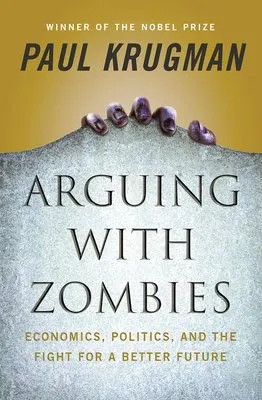
Arguing with Zombies (opens Bookshop.org)
Paul Krugman · 2020
Nobel economist Paul Krugman collects his argument that austerity, tax cuts for the rich and deregulation keep failing, yet persist in policy debates.
-
Background
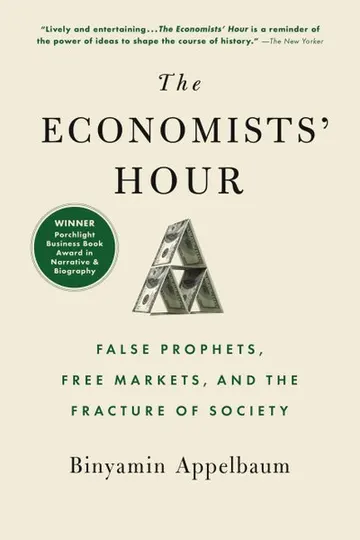
The Economists' Hour (opens Bookshop.org)
Binyamin Appelbaum · 2019
New York Times editorial writer Binyamin Appelbaum traces how economists reshaped policy from the 1960s on, in areas from taxes and antitrust to inflation control.
-
Background
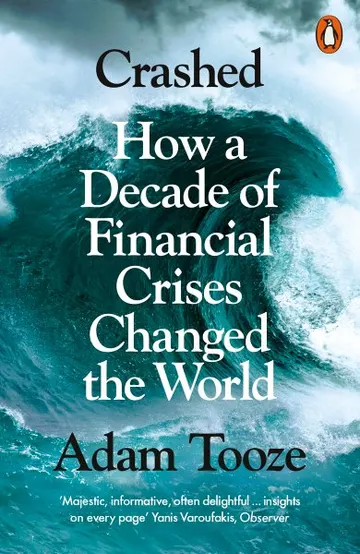
Crashed (opens Bookshop.org)
Adam Tooze · 2018
Columbia historian Adam Tooze follows the 2008 financial crisis from American mortgages to European debt and Russian politics, and shows how central banks acted.
-
Argues from the right
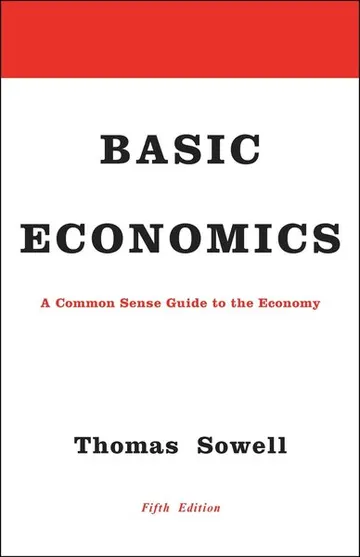
Basic Economics (opens Bookshop.org)
Thomas Sowell · 2014
Economist Thomas Sowell argues that prices, incentives and markets explain most economic outcomes, and that well-meant government interventions often produce results their backers did not intend.
About this file
Everything here was shipped by the daily brief and verified before it appeared: each quote was checked character for character against the source it is linked to. This file separates two things a reader should never have to untangle: how each camp framed the issue, taken from that camp's own outlets, and who is on the record, grouped by the person who spoke. An outlet can quote anyone, so a quote it printed is the speaker's, not the camp's. Checkable claims are tracked to resolution on the claim ledger, and the day-by-day story files live in the story tracker.
One issue, on the record
See who actually took a position.
The daily brief records the arguments around an issue in each actor’s own verified words. Free.
Arrives around 6am ET. Free, and it stays that way.
Cancel anytime. Nothing on the site goes behind a paywall.
One payment through Stripe. No account needed.